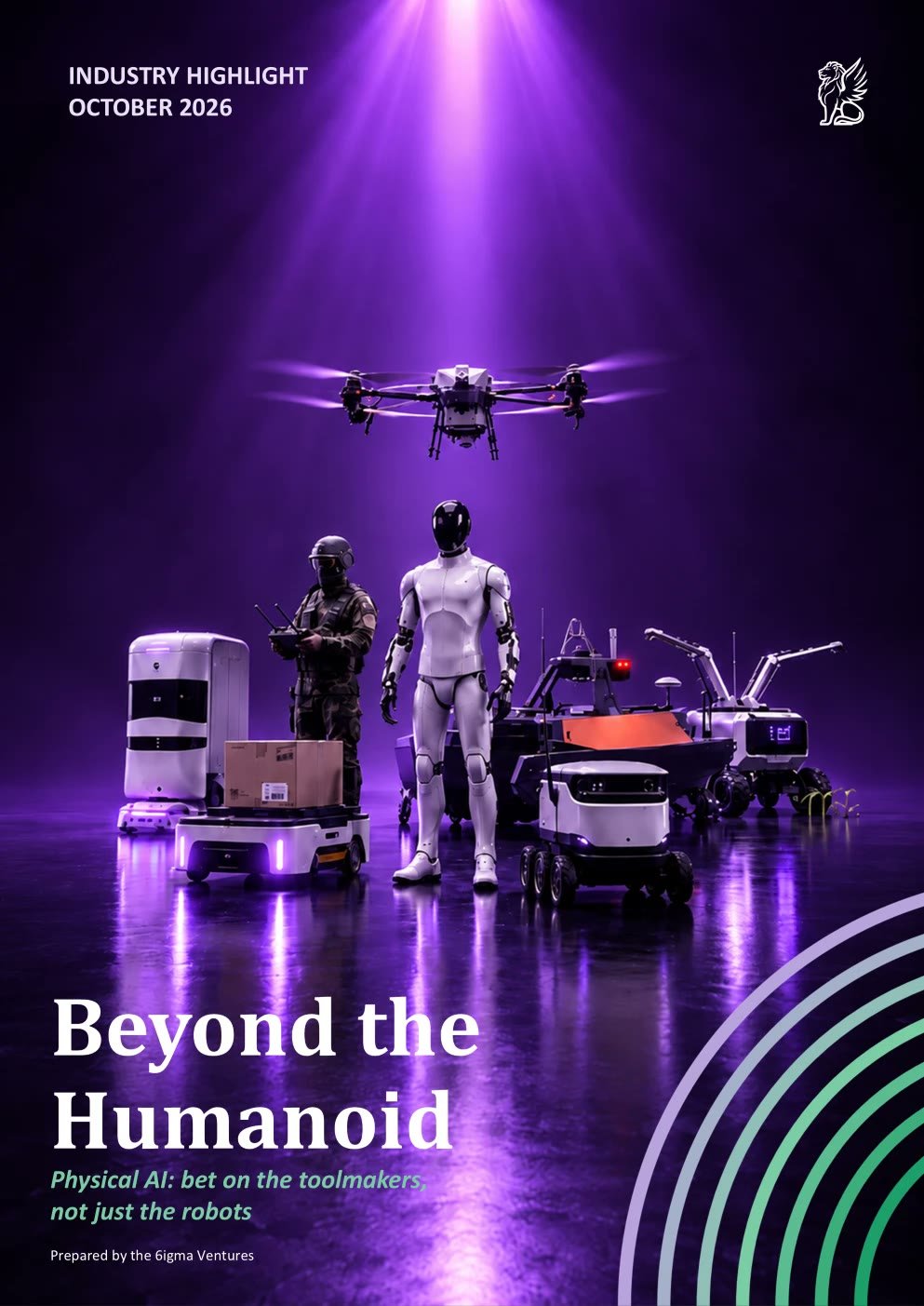
Beyond the Humanoid
Bet on the toolmakers: data, simulation and platforms, not only humanoids.
Foreword
The last AI wave taught software to act on screens. Physical AI puts intelligence inside machines that grasp, move and finish real-world tasks.
- $47.4B. Physical AI raised more venture funding in H1 2026 than in 2022–2024 combined, almost 4x the previous half-year.
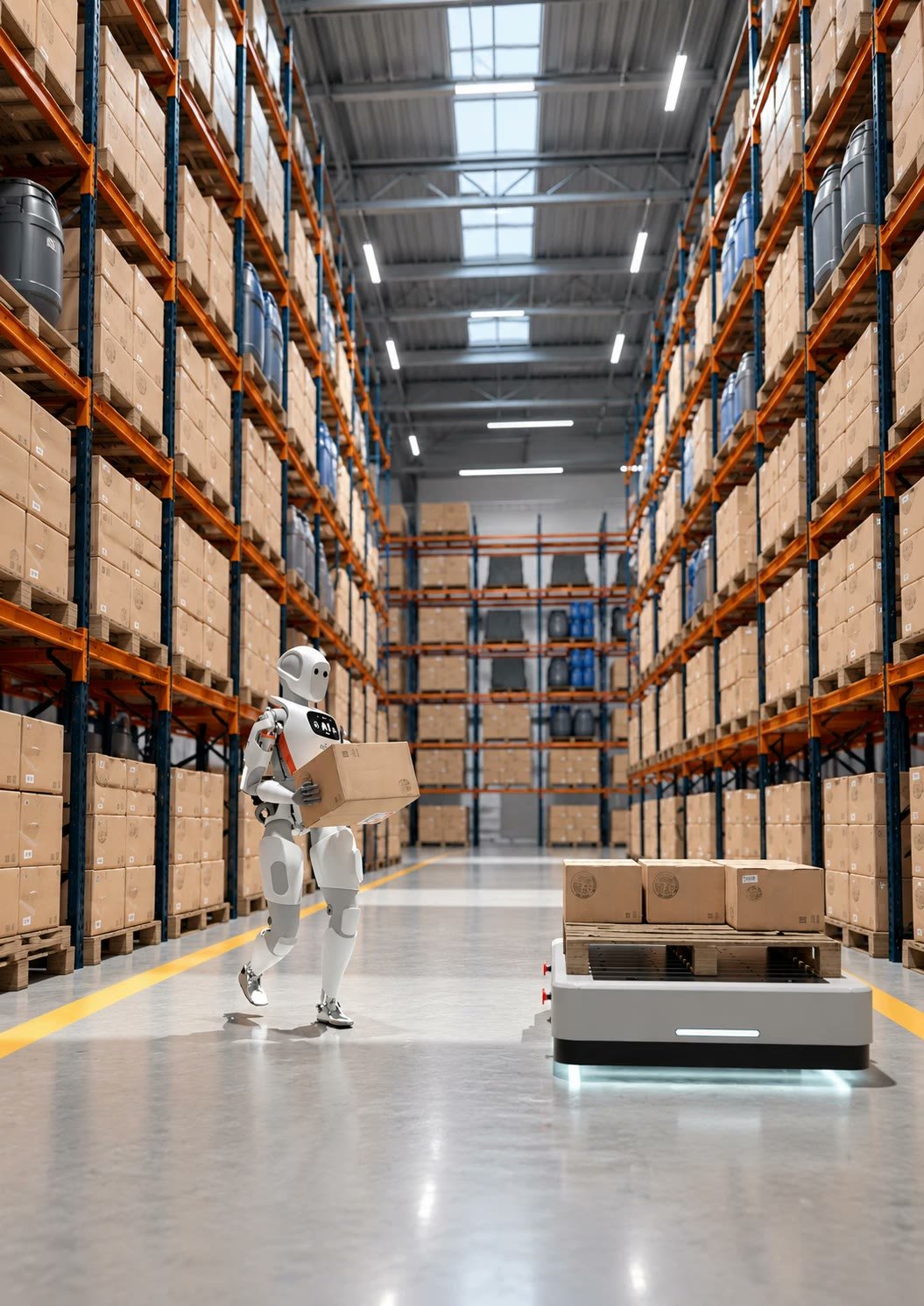
- Deployment is still narrow. About 13,300 humanoids shipped worldwide in 2025, while Waymo already runs around 500,000 paid rides a week.
- Data is the bottleneck. There is no free "internet of robot actions"; robot data has to be manufactured, which makes it a business.
This edition looks at:
- the three shifts reshaping physical AI: data, simulation and platforms;
- three toolmakers building different layers of the stack: Feather, Antioch and Encord;
- where adoption is real today, and where value may accrue for investors.
Robotics' "ChatGPT moment" has not arrived yet. Until it does, the most investable part of physical AI is the infrastructure that makes robots cheaper to train, test and deploy, and the focused robots that already pay for themselves.